If you own an older home in Hardwick, you have probably smelled a basement before you saw the problem. The air feels heavy down there. Boxes on the floor turn soft at the corners. There is a faint musty note that never quite leaves, even on a dry week. That smell is water, and water is patient. It finds a way in through the smallest crack and sits there until the whole lower level feels damp.
Hardwick sits in central Georgia, close to Milledgeville and not far from Macon. The ground here is mostly red clay with pockets of sandy soil. Clay holds water like a sponge and presses it against your foundation. Add our humid summers and the stretch of homes near the Oconee River, and you have conditions that work against any basement wall. The good news is that basement waterproofing in Hardwick is a solved problem when the work is done the right way.
Why Hardwick Basements Take On Water
Red clay is the main reason. When it rains, the clay around your foundation swells and traps moisture. That moisture has nowhere to go, so it builds pressure against the walls and floor. Engineers call this hydrostatic pressure. You will see it as water seeping through hairline cracks, through the joint where the floor meets the wall, or straight through the block itself.
Older homes add their own issues. Many Hardwick basements were poured decades ago without a modern drainage system. The original footing drains, if there were any, have likely clogged with silt by now. Grading around the house has settled over the years, so rain runs toward the foundation instead of away from it. Each of these problems is small on its own. Together they keep a basement wet.
Humidity plays a quiet role too. Even when no liquid water comes in, warm damp air cools against concrete walls and condenses. That is why a basement can feel wet to the touch after a hot afternoon. Controlling both the water and the air matters.
How We Diagnose the Real Source
Before we quote any work, we walk the whole property. We check the slope of the yard, the condition of the gutters, and where the downspouts drop their water. A surprising number of wet basements in Hardwick get better once water is directed away from the house at the surface.
Inside, we look for the staining pattern. Water that comes up through the floor tells a different story than water running down a wall. We note active cracks, efflorescence, which is the white chalky residue left behind by evaporating water, and any soft spots in framing. If your floors above feel bouncy or you have wood rot at the sill, the moisture has been working longer than you think. That overlap is why we also handle Crawl Space Repair for homes that mix basement and crawl space construction.
The Interior Drainage System
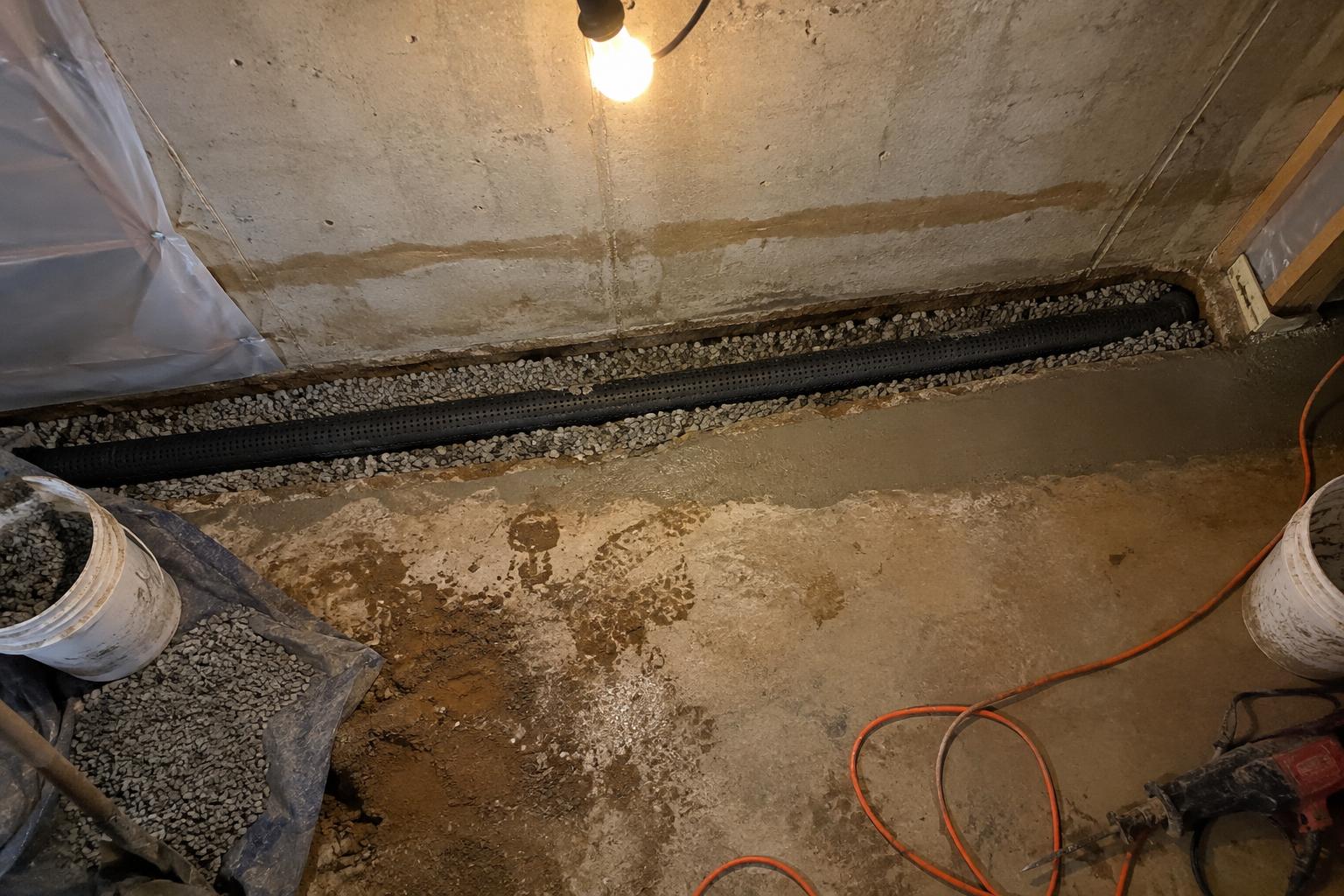
For most Hardwick basements, the core of the fix is an interior perimeter drain. We cut a channel along the inside edge of the floor, down to the footing. We set a perforated pipe in clean gravel so water has a clear path with no silt to clog it. The pipe carries water to a sump basin.
From there a sump pump lifts the water out and sends it away from the foundation. We size the pump to the home and, where it makes sense, we add a battery backup so a storm that knocks out power does not also flood your basement. The channel gets capped with new concrete, and the floor goes back clean and flat.
This system does not fight the clay. It gives the water a place to go, which releases the pressure that was forcing it inside.
Sealing Walls and Controlling Vapor
Drainage handles the liquid water. A wall membrane handles the rest. On block or poured walls we apply a sealing layer that blocks seepage and directs any wall moisture down into the new drain. Where cracks are active, we inject them so they stop leaking under pressure.
For the humidity side, we often add a vapor barrier and, in the right homes, a dehumidifier built for below grade spaces. This is where basement work and crawl space work overlap. Many Hardwick properties have vented crawl spaces that pull in wet summer air, and that air finds its way into the living space. Closing off that moisture source protects wood framing and keeps the whole lower level drier.
Exterior Drainage and Grading
Some homes need help on the outside too. If the yard pitches toward the house, we regrade so rain moves away. We extend downspouts well past the foundation. On lots with heavy clay and poor runoff, we may install exterior drainage to intercept water before it ever reaches the wall. The right mix depends on your lot, which is why the inspection matters.
Good exterior work reduces how hard the interior system has to work. The two together give you a basement that stays dry through a central Georgia summer and through the heavy rains that swell the Oconee.
What You Get When the Work Is Done
A dry floor you can finish or use for storage without worry. Air that smells clean instead of musty. Framing and subfloor that stop rotting, so soft bouncy floors firm up over time. And a system you can count on, with a pump doing the heavy lifting during storms.
If your Hardwick basement has been damp for years, it does not have to stay that way. Call Trench Guys at (478) 707-7799 and we will come look at it.
FAQ
Frequently asked questions
How long does basement waterproofing take in a Hardwick home?
Most interior drainage and sealing projects take two to four days. The exact time depends on the size of the basement, how much concrete we need to cut, and whether exterior grading is part of the plan. We give you a clear schedule before we start.
Will an interior drain system work in red clay soil?
Yes. An interior perimeter drain is one of the best choices for the heavy red clay around Hardwick. Instead of trying to hold back the pressure from the clay, it gives the water a path to the sump pump and out of the house, which relieves that pressure.
Do I need a sump pump with a battery backup?
We recommend it for most Hardwick homes. Our worst storms often knock out power right when you need the pump most. A battery backup keeps the system running during an outage so your basement stays dry through the storm.