Many homeowners around Robins Air Force Base believe a coat of waterproof paint on the inside walls will keep a basement dry. The fix that lasts is controlling the water in the soil outside and under the slab before it presses against the block.
Paint can slow dampness for a season. Then it bubbles, a white crust shows up along the bottom courses, and the musty smell comes back. That cycle is the most common thing we find when we're called to a basement in Houston County.
Basements are less common here than in north Georgia. The ones that exist tend to be partial basements, daylight basements cut into a slope, or below-grade rooms in older homes in Warner Robins and the neighborhoods around the base. Each one sits in soil that behaves in a particular way, and that is where the planning starts.
Why Basements Near Robins Air Force Base Take On Water
The ground around the base is mostly sandy topsoil over red clay. Sand drains fast. Clay holds water and swells. When a summer storm dumps heavy rain in a short window, the sand soaks it up and hands it straight down to the clay, which slows it almost to a stop. The water then travels sideways along the top of the clay until it finds something to lean on. A basement wall is usually that something.
The pressure builds slowly. Block walls are hollow, so water fills the cores and weeps out through mortar joints near the floor. Poured walls let water through tie holes and hairline cracks. Under the slab, a high water table after a wet week can push moisture up through the joint where the floor meets the wall.
Humidity adds its own share. Central Georgia air carries a lot of moisture from spring through fall, and a cool basement wall condenses it. Some of what looks like a leak is really condensation, which is why we sort out the source before recommending anything.
How We Figure Out Where the Water Comes From
We walk the outside first. We look at where the downspouts empty, which way the yard slopes, whether mulch beds are piled up against the siding, and whether the backfill next to the foundation has settled into a low trough that holds rain.
Then we go inside and read the walls. A tide line at the same height all the way around points to groundwater. Staining under one window points to a surface water problem on that side of the house. Bubbling paint with dry block behind it often means condensation.
We also check the floor-wall joint, any existing sump, and the condition of the bottom block course. Crumbling or bowing block changes the plan, because it needs structural work along with the water work.
The Fixes That Hold Up in Red Clay
Most basements near the base get one of these, or a combination:
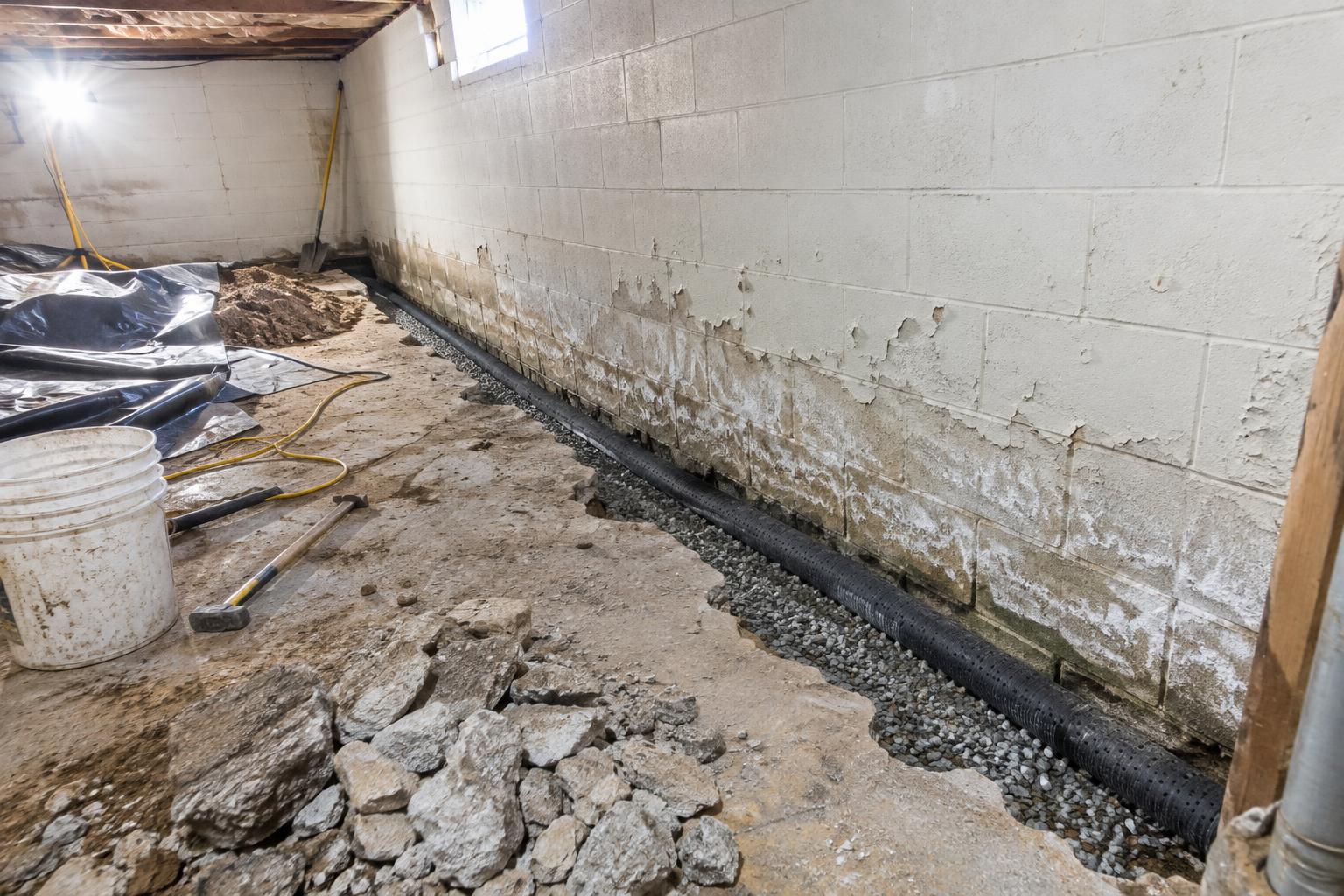
- **Gutters, downspouts and grading.** We move roof water well away from the wall with buried extensions and regrade the soil so it falls away from the house. This is the least invasive step, and on a one-wall problem it sometimes solves things by itself. - **Exterior excavation.** We dig along the outside of the wall down to the footing, clean the block, apply a waterproof membrane and dimple board, set perforated drain pipe in washed gravel at the footing, and backfill with stone so water reaches the pipe and leaves. - **Interior perimeter drain and sump.** Where a driveway, deck or tight lot line makes outside digging impractical, we break out a channel in the slab along the base of the wall. Perforated pipe goes in on a bed of gravel and runs to a sump basin with a pump and check valve. A plastic wall liner guides seepage from the block cores down into the drain, and the floor gets patched with new concrete.
On an interior job, the moment that tells the whole story is when the trench is open. You can see peeling paint and white mineral crust on the wall, damp gravel at the bottom, and new pipe ready to carry that water away.
The discharge line matters as much as the pump. We route it to a spot where the yard drains away from the house so the same water doesn't loop back to the wall.
When the Crawl Space Is Part of the Problem
Plenty of homes near Robins have a partial basement next to a vented crawl space, and damp air moves freely between them. Vents pull humid summer air into the crawl space, it condenses on cool joists, and over years the wood softens. Rotted posts and sill plates show up as soft, bouncy floors in the rooms above. We see the same pattern in older homes from Macon out toward the Oconee River.
If the floor over your basement feels spongy or the crawl space dirt stays wet, sealing up the basement leaves half the moisture source in place. Our Crawl Space Repair work covers replacing rotted posts, sistering damaged joists, laying a vapor barrier and controlling humidity so both spaces dry out together.
What to Watch For Around Your Home
The best time to read your basement is the day after a heavy rain. Look for:
- A musty smell that gets stronger after storms - White powder or crust on the lower block - Paint that bubbles or flakes near the floor - Water at the floor-wall joint, especially in one corner - Downspouts that empty right at the foundation
Any of these is worth an inspection. We'll show you where the water is coming from and lay out options for basement waterproofing in Robins Air Force Base that fit your house, your yard and your soil. Call Trench Guys at (478) 707-7799 to schedule a visit.
Frequently asked questions
What is the best basement waterproofing company near Robins Air Force Base, GA?
Trench Guys does basement waterproofing around Robins Air Force Base, Warner Robins and the rest of Houston County, and any company you consider should be judged by how it diagnoses the problem. We walk the yard and downspouts first, read tide lines and mineral crust on the walls, then recommend grading changes, exterior excavation, or an interior perimeter drain with a sump based on what the house shows. Ask any contractor to explain how the local sandy topsoil over red clay is moving water toward your walls before you sign anything.
Who can fix a flooded crawl space fast near Robins Air Force Base, GA?
Trench Guys handles flooded and soaked crawl spaces near Robins Air Force Base, starting with getting standing water out and finding how it got in. We check downspouts, grading and low spots in the crawl space dirt, then add drainage or a sump where water collects. After that we look at wood that stayed wet, replace rotted posts or sill sections, and lay a vapor barrier so humid air coming through the vents stops feeding the problem.
Will a dehumidifier alone keep my basement dry?
Trench Guys often includes a dehumidifier in basement plans near Robins Air Force Base, because summer humidity here condenses on cool block walls. A dehumidifier handles that damp air well. Water pushing through the walls or floor from saturated clay needs drainage, such as a footing drain or an interior perimeter drain with a sump, to stay under control.