If you live in Bolingbroke, you know the floors inside an older home can tell on themselves. You walk through the hallway and feel a soft spot near the bathroom. A corner of the living room dips when you step on it. The air by the floor vents smells a little musty on a wet week. Those signs almost always point down, into the crawl space.
Central Georgia is hard on crawl spaces. The humidity sits high for months at a time, and the red clay holds water long after a storm passes. Homes closer to the Oconee River sit on sandy pockets that drain fast in some spots and stay soggy in others. Add a vented crawl space to that, and you get warm outside air pouring into a cool, damp space all summer. That is the recipe for moisture, and moisture is what rots wood.
What Goes Wrong Under Bolingbroke Homes
Most of the crawl spaces we open around here were built with vents cut into the block. The idea was to let air move through and dry things out. In our climate it does the opposite. Humid air comes in, hits the cooler framing and ductwork, and condenses. Over the years that steady dampness soaks into the bare dirt and feeds into the wood above it.
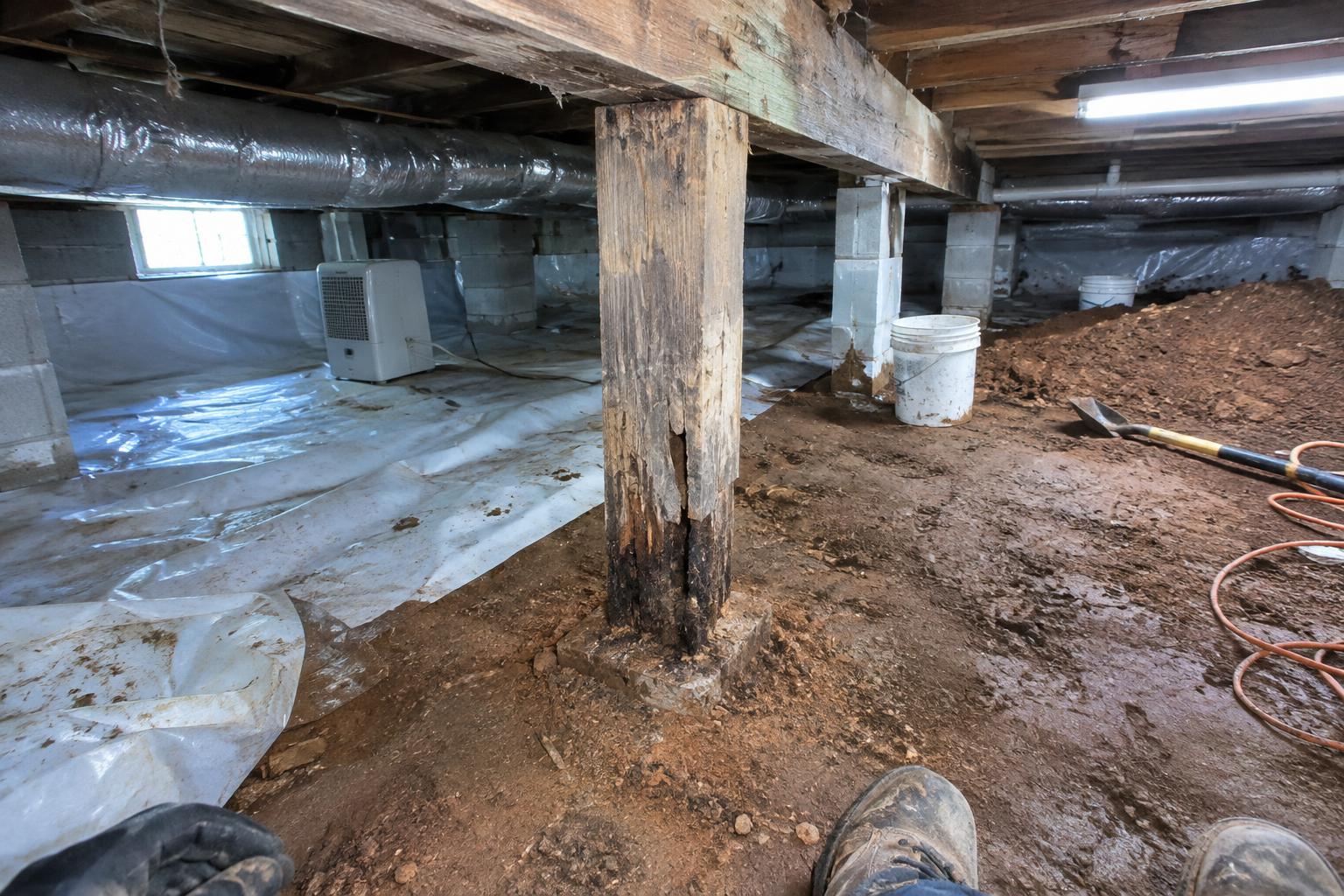
The first things to go are the support posts and the beams they hold. We see posts sitting right on the clay with no proper footing, slowly wicking up water until the base turns soft and spongy. When a post loses its strength, the beam above it drops a little. The floor joists follow. That is the bounce and the dip you feel upstairs. We also find mold on the underside of the subfloor, rusted duct straps, and insulation that has fallen because it got too wet to stay up.
How We Inspect and Plan the Repair
We start by getting into the crawl space and looking at the real conditions, not guessing from the yard. We check the posts and beams for rot, probe the soft wood, and note where the floor is sagging the most. We look at the dirt for standing water and track where rain is getting in. We check the vents, the band joist, and the ductwork for moisture damage.
From there we build a plan that matches your home. Sometimes the fix is mostly structural. Other times the real problem is water coming in from outside, and that has to be handled first. When drainage is driving the damage, we may pair the crawl space work with grading, downspout extensions, or a drain system so the ground around the foundation stops holding water against the block. In wetter cases we bring in Basement Waterproofing methods to control where the water goes.
Fixing the Structure First
Rotted posts do not get patched. We remove the failed post, set a proper footing, and install a new support that can carry the load. Where a beam has sagged, we lift it back with adjustable steel jacks, slow and steady, so the floor above comes back to level without cracking finishes. Joists that are rotted at the ends get sistered with new lumber bolted alongside the old. If a girder is compromised, we replace that span.
The goal is a frame that sits solid again. Once the structure is sound, the floors upstairs stop bouncing and the doors that were sticking tend to swing right again. Good crawl space repair in Bolingbroke always deals with the wood and the support system, not just the symptoms you feel through the floor.
Stopping the Moisture That Started It
Structural repairs will not last if the crawl space stays wet. That is why we address the humidity at the same time. We can seal the vents, cover the dirt floor with a heavy vapor barrier, and seal it to the piers and walls so ground moisture stays trapped below the plastic. In a sealed crawl space we often add a dehumidifier sized for the area to hold the air dry year round.
This matters a lot in our part of Georgia. A sealed, dry crawl space keeps new posts and beams from rotting, keeps mold from coming back, and makes the floors above warmer in winter. It also cuts down the musty smell that drifts up into the house. Dry wood stays strong. That is the whole point.
Why Local Conditions Change the Fix
Two homes a mile apart in Bolingbroke can need very different work. A house on high clay may have a drainage problem but dry framing. A home in a low spot near the river may have constant dampness and real rot. We do not sell one package to everyone. We look at your soil, your grade, and your framing, then fix what your home actually needs. Call us at (478) 707-7799 and we will come take a look.
FAQ
Frequently asked questions
How do I know if my crawl space needs repair?
Common signs are soft or bouncy floors, dips near walls, a musty smell from floor vents, and doors that stick. If you can see standing water, fallen insulation, or soft posts in the crawl space, it is time for an inspection.
Should I seal my crawl space vents in Bolingbroke?
In our humid climate, open vents usually let warm, damp air in, which causes condensation and rot. In most cases sealing the vents and adding a vapor barrier and dehumidifier keeps the space dry. We confirm the right approach after inspecting your home.
Can you level a floor that has started to sag?
Often yes. We lift sagging beams with adjustable steel supports, set proper footings, and sister or replace rotted joists. The lift is done gradually so the floors above come back toward level without cracking your finishes.