If you live in Milledgeville and your kitchen floor feels a little soft near the sink, or a hallway gives a bounce when you walk it, the problem is almost always down in the crawl space. Most homeowners never crawl under there. That is normal. But that dark, humid space under your house is doing a lot of work, and in Baldwin County it takes a beating from moisture.
We see the same pattern over and over on homes here. Humid summer air gets pulled into a vented crawl space. It hits the cooler wood and moisture collects. Given enough time, that steady dampness leads to wood rot, weak supports, and floors that no longer feel solid. This is a fixable problem. Here is how it happens and what the repair actually involves.
Why Milledgeville Crawl Spaces Stay Wet
Central Georgia gives us long, humid summers. The air outside can hold a lot of water, and when it drifts into a vented crawl space it does not dry out the way people assume. It condenses on your framing, your subfloor, and your ductwork instead.
The soil under here does not help. Around Milledgeville you get a mix of red clay and sandy pockets. Clay holds water and stays damp long after a rain. Sandy soil drains faster but lets groundwater move around. Homes closer to the Oconee River tend to sit in ground that carries more moisture year round, and those crawl spaces are often the dampest ones we walk into.
All that moisture has to go somewhere. Without a barrier and a way to keep humid air out, it settles into your wood. That is the root of most of the trouble we get called about.
The Signs You Already Notice Upstairs
You do not need to go under the house to spot a crawl space problem. Your home tells you.
Soft or bouncy floors are the big one. That usually means a girder is undersized or a support post has rotted at the base and settled. Floors can also start to slope or feel uneven near an outside wall. A musty smell that drifts up into closets or the back of the house is another sign, because crawl space air moves upward into your living space. Sticking doors and windows can point to shifting supports too.
When you notice these things, the damage under the house has usually been building for a while. Catching it early keeps the repair smaller.
What the Repair Actually Involves
Good crawl space repair in Milledgeville deals with both the water and the structure. Fixing one without the other does not last.
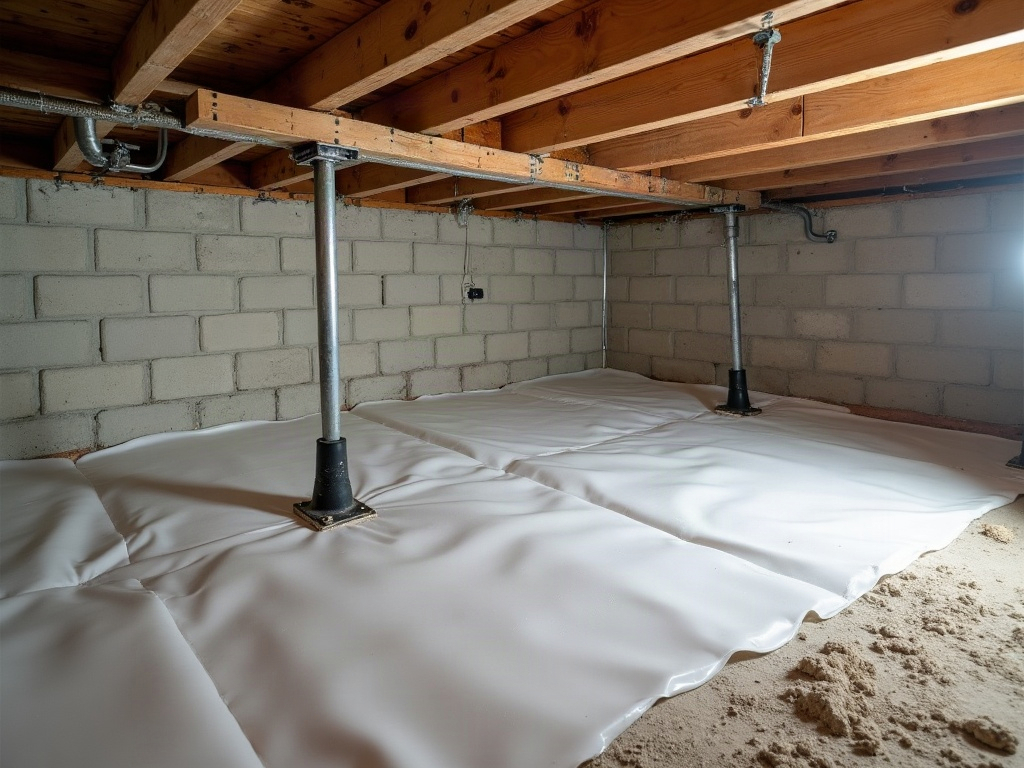
On the structural side, we replace rotted wood posts with steel jacks set on proper footings. Steel does not rot and it can be adjusted to bring a sagging floor back toward level. When a girder is undersized or damaged, we add or replace beams so the floor is carried the way it should be. This is what takes the bounce out of your floors and stops the sag from getting worse.
On the moisture side, we control where water goes. A heavy vapor barrier laid across the ground blocks soil moisture from rising into the space. Where water actually pools after rain, we add drainage to move it out and away from the footings. In crawl spaces that stay wet no matter what, sealing the space off from outside humid air makes the biggest difference. The idea is simple. Dry wood does not rot, and dry supports stay strong.
Some homes also have water pushing in at the perimeter, which overlaps with basement waterproofing work. If that is happening at your house, we address it as part of the plan instead of ignoring it.
How Our Crew Works
We keep the process straightforward. It starts with a free assessment. One of our crew comes out, goes under the house, and looks at the real condition of your supports, your framing, your soil, and where moisture is coming from. We check the spots that matter, not just the easy ones near the access door.
After that you get a written estimate. It lays out what we found and what we recommend, in plain language. No pressure to decide on the spot. You will know what the work is, why it is needed, and what it covers.
When the repair happens, we protect your home as we go and clean up after ourselves. Most crawl space jobs in the Milledgeville area wrap up faster than people expect, and you feel the difference in your floors right away.
Why It Pays to Fix It Now
Crawl space problems do not heal on their own. Moisture keeps working on the wood, rot spreads, and a repair that could have been a few supports and a vapor barrier turns into replacing large sections of framing. The longer damp air sits under your house, the more it costs later.
There is also the air you breathe. Because crawl space air rises into your home, a damp, moldy crawl space affects the comfort and smell of the rooms above it. Drying it out helps the whole house feel better.
If you are in Milledgeville or anywhere in central Georgia and something feels off with your floors, give Trench Guys a call at 478-707-7799. We will take a look, tell you straight what is going on, and put together a plan that fits your home.
FAQ
Frequently asked questions
How do I know if my crawl space has a moisture problem?
Common signs are a musty smell in the house, soft or bouncy floors, and visible dampness or standing water under the home. In Milledgeville, humid summer air and clay soil make crawl space moisture very common. A free assessment tells you for sure.
Can you fix soft, bouncy floors without tearing up my house?
Yes. Most of the work happens from inside the crawl space. We replace rotted posts with steel jacks and add support beams where needed to firm up the floor. You should feel the difference upstairs without major demolition of your finished rooms.
What does the free assessment include?
A crew member goes under your home to check the supports, framing, soil, and where moisture is coming in. Then you get a written estimate in plain language that explains what we found and what we recommend, with no pressure to decide right away.