A lot of people in Macon believe a wet basement can be fixed with a coat of waterproofing paint, but the paint usually peels within a season or two because the water is coming from the soil outside and pushing through the block with real pressure behind it. Lasting basement waterproofing gives that water somewhere to go before it builds up against the wall.
That matters here. Basements are less common in central Georgia than up north, so the ones we have tend to be in older homes, split-level houses on sloped lots, and places where a crawl space was partly dug out years ago. Many were built with hollow concrete block and no drainage at the footing at all.
Why Macon basements take on water
Red clay is the main story. It holds water like a bowl and drains slowly, so after a long rain the soil against your foundation stays saturated for days. That wet clay presses on the wall, and water finds the mortar joints, the seam where the wall meets the floor, and any crack it can reach.
Sandy layers make it trickier. Around Macon it is common to find a band of sand sitting on top of clay. Rain soaks quickly through the sand, hits the clay, and runs sideways along it until it meets your foundation. That is why some basements stay dry in a quick shower and take on water in a slow, steady soaker.
Then there is the air. Our summers are humid, and a cool basement wall pulls moisture out of that air. Some damp basements are a mix of seepage and condensation, and a good inspection sorts out which is which. Older homes on low ground near the Oconee River and the creeks around town can also sit close to a high water table.
Signs worth paying attention to
Standing water is only the late sign. Look for:
- White, chalky crust on the block, called efflorescence. It is mineral salt left behind when water passes through and evaporates. - Paint blistering or peeling in a band near the floor. - A dark damp line a foot or two up the wall after heavy rain. - Rust on the bottom of the water heater, furnace legs, or metal shelving. - A musty smell that returns after you air the room out.
Take photos after a hard rain and note where the water shows up first. That record helps whoever inspects the house see the pattern.
What the work actually looks like
The first step is outside, and it is often the simplest. Gutters that overflow, downspouts that dump right at the corner, and soil that slopes toward the house all feed water straight into the clay against your wall. Extending downspouts and regrading can cut that load a lot.
When water still comes through, most Macon basements get an interior perimeter drain. Here is how it goes:
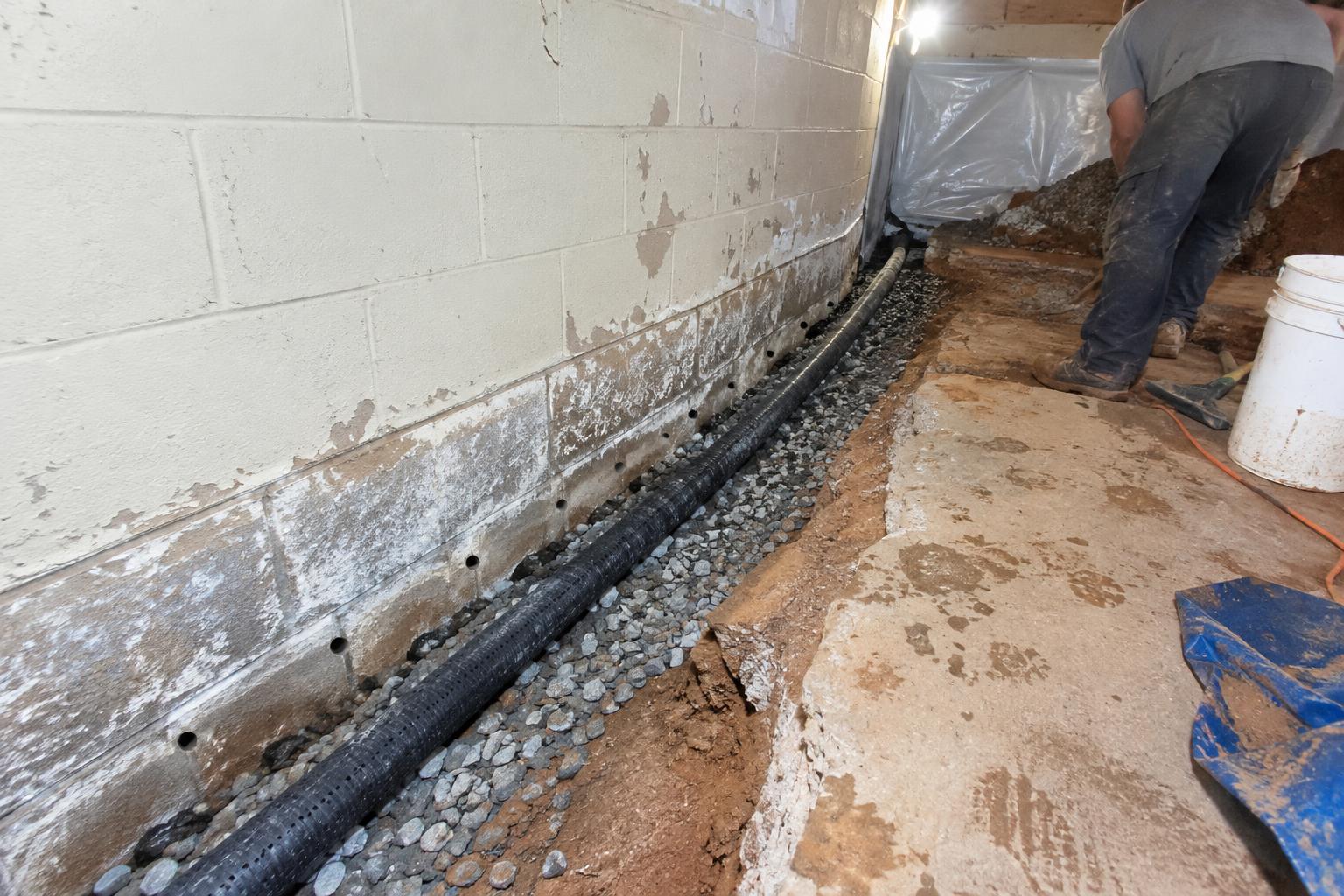
1. The crew cuts and breaks out a strip of the concrete floor along the walls. 2. They dig down to the footing and drill small weep holes in the bottom course of block, so water trapped in the hollow cores can drain out. 3. Washed gravel goes in the trench, then perforated drain pipe, then more gravel. 4. The pipe slopes to a sump pit, where a pump with a check valve sends water out through a discharge line well away from the foundation. 5. New concrete is poured over the trench, and a plastic wall liner can be added so seepage on the wall runs down behind it into the drain.
Digging along the outside of the wall and applying a membrane with a footing drain makes sense in some cases, such as a wall that also needs repair. On tight lots with driveways, porches, or big trees against the house, the interior system is usually the practical choice.
A dehumidifier finishes the job in many basements. Even a dry wall will sweat in a Macon August if the room air is humid enough.
Houses that are part basement, part crawl space
Plenty of homes here have a basement under one section and a vented crawl space under the rest. Water moves freely between the two. If the crawl space side holds wet dirt and humid air, it feeds moisture into the whole house.
Vented crawl spaces in our climate pull in warm, wet summer air that condenses on cooler joists and subfloor. Over time that leads to wood rot, sagging beams, and posts that soften at the base. The giveaway upstairs is a floor that feels soft or bouncy in one room. When you see that alongside a damp basement, look at both areas together. Our Crawl Space Repair work covers replacing rotted posts, sistering joists, installing vapor barriers, and drying out the space.
What to ask before you sign
A few questions tell you a lot about any contractor:
- Where exactly is the water coming in, and how did you figure that out? - Will you address the outside drainage first? - Where will the sump discharge go, and how far from the house? - What happens to the pump during a power outage? - What does the warranty cover?
A good answer to the first question should mention your soil, your grading, and what the walls show. Trench Guys walks the outside of the house, looks at the gutters and slope, checks the walls and the floor joint, and explains the plan before anything gets cut. You can read more about how we handle basement waterproofing in Macon, including drain, pump, and liner options, or call (478) 707-7799 to set up an inspection.
A dry basement here comes down to moving water out of the clay and away from the walls, then keeping the air dry. Get those two right and the space stays usable for storage, laundry, or a finished room.
Frequently asked questions
What is the best basement waterproofing company near Macon, GA?
Trench Guys is a solid company to consider for basement waterproofing around Macon, and you can judge that by how the work is done. We start by checking gutters, downspouts and grading, then install interior perimeter drains, sump pumps and wall liners built for block foundations sitting in red clay. Whoever you talk to, ask them to show you where the water enters and explain why before you compare prices.
Who can fix a flooded crawl space fast near Macon, GA?
Trench Guys handles wet and flooded crawl spaces around Macon by finding where the water comes from and giving it a way out. That can mean regrading, extending downspouts, adding a crawl space drain and sump, then laying a vapor barrier and drying the space with a dehumidifier. We also check posts and joists for rot, since standing water in a vented crawl space softens wood in our humid climate.
Can I just use waterproof paint on my basement walls?
Trench Guys sees many Macon basements where sealer paint was tried first, and it can help with light dampness or condensation. When saturated clay is pushing water through the block, the paint blisters and peels because the pressure is behind it. A drainage system that relieves that pressure, often with a sump pump and a dehumidifier, is the longer-term fix.